Law Enforcement Hub

Today’s law enforcement agencies face a growing range of challenges, from AI and deepfakes to complex high-profile cases. And while criminals are quick to embrace emerging technologies and use them to their benefit, police forces and federal agencies have been slow to catch up, putting critical teams at a disadvantage. This guide offers a roadmap to closing the technology gap, increasing security and supporting inter-agency communication for more effective case management.
Why Integrated Technology Is Essential for Law Enforcement Agencies
Traditional processes are heavily entrenched among law enforcement organizations, and typically rely on a combination of physical and digital recordkeeping across multiple platforms. But disjointed systems come with risks. Lengthy information sharing processes often slow investigations. Data silos let important details fall through the cracks. Older technologies lack the security measures to protect against hacking, making officers, CIs and victims vulnerable.
Key Trends:
new IoT devices connect to the internet every second
Security Convergence Guideof law enforcement agencies report ongoing challenges in recruitment
Doing More with Less: How Kaseware Supports Law Enforcement Amid Staffing Shortagesof data breaches in 2023 involved a human element
Security Convergence Isn’t Theory: Overcoming Concerns & Building a Security Convergence Strategyof law enforcement agencies struggle to analyze data and unlock insights
The Future of Law Enforcement: Key Technology Trends Shaping 2025Digital Evidence Management
Modern investigations typically include a mixture of physical and digital evidence, which may be spread out across databases and evidence storage areas.

Common types of digital evidence that requires proper storage and management:
- Body cam footage
- CCTV footage
- Photo files
- Text messages
- Internet history
- GPS data
- Financial transaction logs
The Challenge:
It’s crucial for investigators to know what kinds of evidence are present in a case and where to find them for analysis. This often takes extensive back-and-forth with multiple departments and sources, and items may still be missed.
The Solution:
- Consolidation of digital evidence: Integrated case management software can automatically collect evidence connected to a specific case from multiple sources, and store them in a centralized location.
- Digitization of physical evidence: Photos, videos, and detailed descriptions of physical items can reduce risks to evidence integrity while enabling investigators to analyze evidence in the field.
Protecting Sensitive Information
Relevant information from public sources, such as victims, anonymous reporters, or witnesses must be protected against exposure. Security measures should include:
1. End-to-end Data Encryption
Ensures that personally identifiable information and sensitive case details are protected at all times.
2. User Access Controls
Restrict the ability to access or modify case information at the organization, department, and individual level.
3. System Consolidation
Closes security gaps present during information transfer between isolated databases, such as physical copies, emails, and data drives.
4. CJIS Compliance Frameworks
Establish standardized controls and audit mechanisms that ensure all data handling aligns with federal security mandates, enabling sustained regulatory adherence and mitigating risk across multi-agency environments.
Real-Time Case Information Access
Case information is typically stored across separate databases, and collaboration involves outreach to different departments or agencies. Missed, misinterpreted, or misreported intelligence can make analysis difficult and time-consuming, causing delays in case resolution. By integrating data and reporting systems, law enforcement agencies can access detailed information immediately and without imposed risks.
Benefits of Data Sharing:
- Improved communication and coordination
- More efficient intelligence gathering and analysis
- Faster response time to new threats and evidence
- Increased data security for officers, witnesses, and victims
- Enhanced ability to recognize criminal activity patterns
Key Enablers:
- Integrated Platforms: Unified law enforcement case management software that consolidates incoming and outgoing details.
- Secure Public Portals: Encrypted channels that allow for quick, anonymous, and secure information gathering.
- Inter-Agency Information Exchange: Data sharing between police forces, federal agencies, and fusion centers for easier collaboration.
- Training & Support: Leadership support for new processes to ensure widespread adoption and ongoing improvements.

Security Convergence: A Unified Approach to Modern Security Challenges
Discover the benefits of a security strategy that brings cybersecurity and physical security measures together.
Addressing Staff Shortages
Law enforcement faces critical personnel shortages with wide-reaching effects.
1. Longer response times and investigative backlogs
Fewer officers means that each investigation takes longer, increasing the chance of repeat offenses before case closure.
2. Reduced capacity for proactive policing
Crime prevention methods like community outreach and active police patrols may fall to the wayside.
3. Administrative delays
Time-consuming tasks like filling out request forms and entering repetitive information into reports hinder information gathering and analysis.
4. Increased officer burnout
Managing increased caseloads with fewer resources can negatively impact investigative teams and lead to higher employee turnover.
How Case Management Software Helps:
- Automations streamline investigation workflows with less need for human intervention.
- Data field auto-fill options and pre-configured reporting saves significant time on documentation.
- Dashboards and alerts show officers the most up to date and relevant information for each case.
- Analytics tools help investigators visualize case information and draw important connections between details quickly.

Outdated Investigation Tools Are Wasting Budget: Why Consolidating Allows You To Do More With Less
Learn how to replace legacy systems with a unified investigation case management system for increased efficiency, enhanced security, and rapid case closure.
Technology as the Foundation for Case Management
Centralized case management software forms the backbone of efficient, collaborative investigations:
- Consolidates case information from all sources.
- Protects sensitive personal and case-related data.
- Enables real-time information sharing.
- Automates administrative tasks to save time.
- Allows access to case details from the field.
Commonly Integrated Tools:
- OSINT
- IAM & PAM
- SIEM & UBA
- Data Loss Prevention (DLP)
Culture, Training, and Leadership
Technology implementation should be supported by leadership to ensure adoption and proper use.

Best Practices:
- Work with your software vendor to adapt platforms to existing procedures.
- Offer role-specific training in person or virtually at regular intervals.
- Create reporting channels for IT issues and security concerns.
- Enforce security protocols and respond to violations quickly.
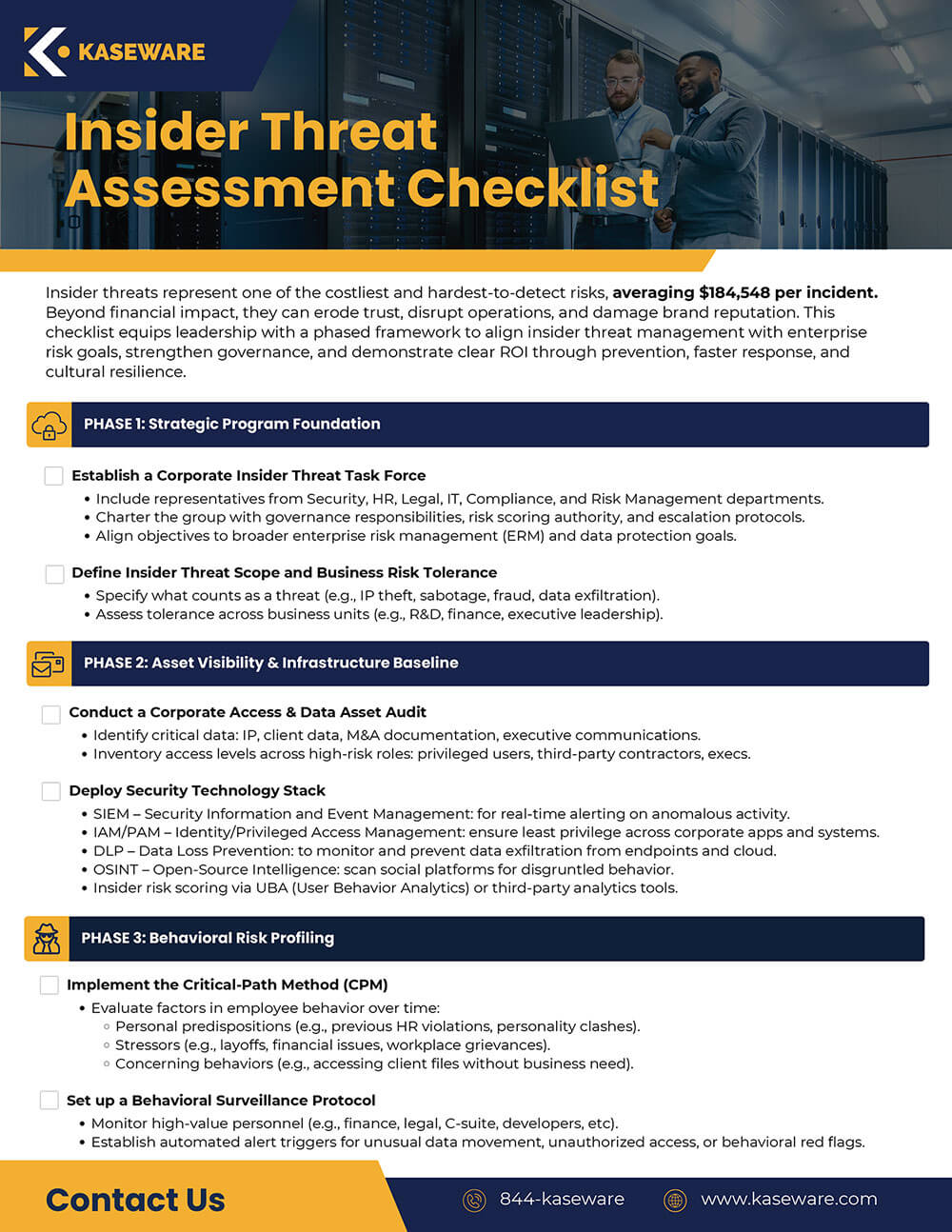
Insider Threat Checklist
The tools to strengthen governance, align with enterprise risk goals, and prove ROI through measurable outcomes.
Resources & Tools
GET A LIVE, CUSTOMIZED DEMO
Give your law enforcement officers the tools they need
to fight crime proactively.
"*" indicates required fields